Am in the Mountains
Don‘t expect any fast email reply this week. Am in the mountains. ☺️
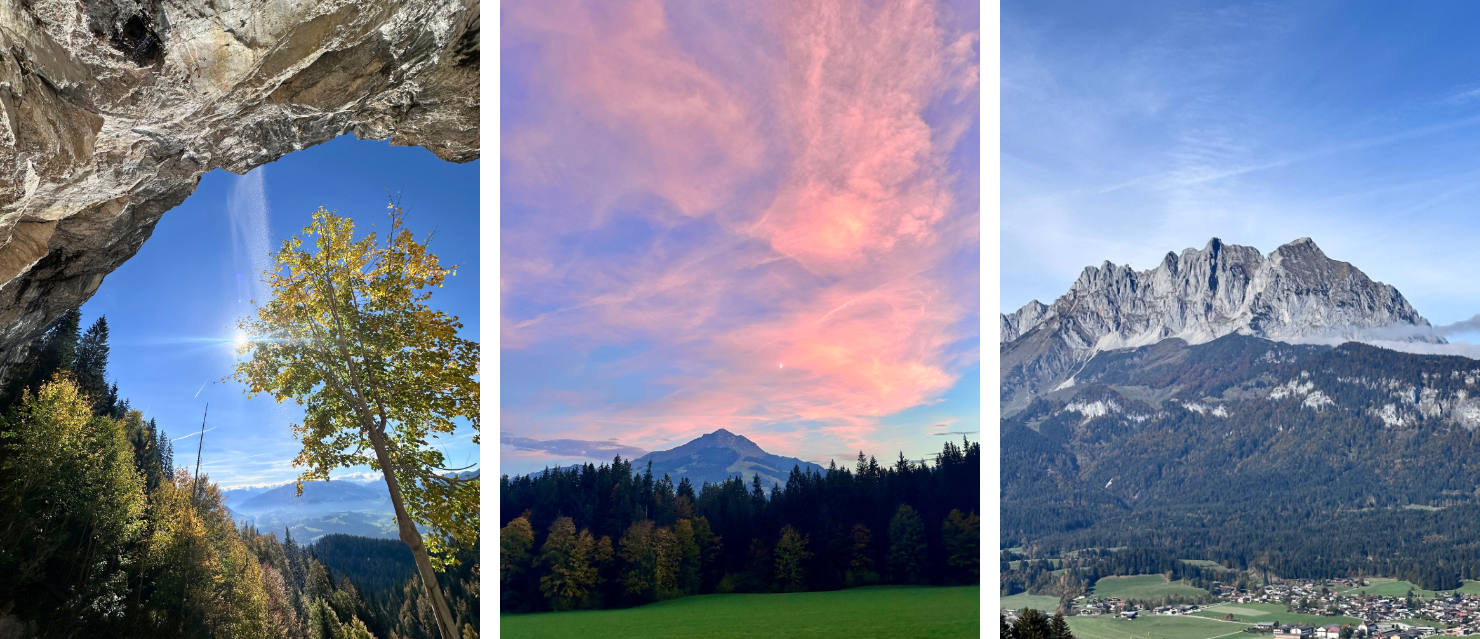
Don‘t expect any fast email reply this week. Am in the mountains. ☺️
I genuinely enjoyed being part of Head in the Cloud by mittwald this year. Now they released the video of my talk (it’s in German, sorry), which was titled “Weniger Slides. Mehr Austausch.” (something like “Fewer slides. More interaction.”).
Next to this, I gave a couple of interviews. One of them dealt with the how people these days see events and what is important for them. I proposed that it could work to run an event with even fewer talks than at beyond tellerrand, but more tome to chat and have conversations.
Video by mittwald. As said: I had a lovely time in Espelkamp and heard many other people say the same. The vibe, the people, everything fit very well … and the weather did also ;)
I will be back.
I totally would love to go to ffconf, but sadly I am building up an event that help running on the 13th, which takes place on the 14th.
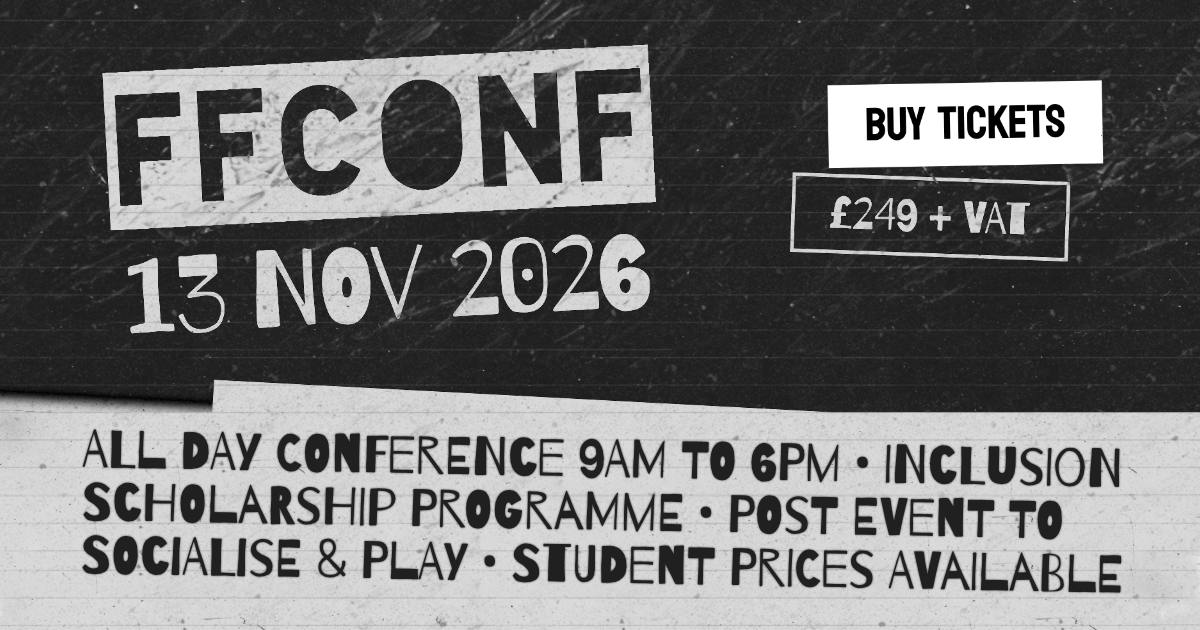
Well, I can’t go sadly, but YOU should! ffconf is a labour of love from Remy and Julie, who have run it themselves for 17 years! Their warmth shows in everything. It’s a single-track day in the cosy Duke of York’s cinema, so everyone shares the same thoughtful curated talks and has something to chat about afterwards. Exactly the way I like it. Join a seafront run, a coffee morning and/or a “Lunch with Future Friends”. I bet no one ends up alone, right?
And next to attending a great event, buying a ticket for ffconf on Friday 13th November is also a small vote for keeping independent, community-run events like this alive!
Keir and Craig once more did a fantastic job in organising and running Craft & Work 2026 in London. A great day with lots of good conversations.
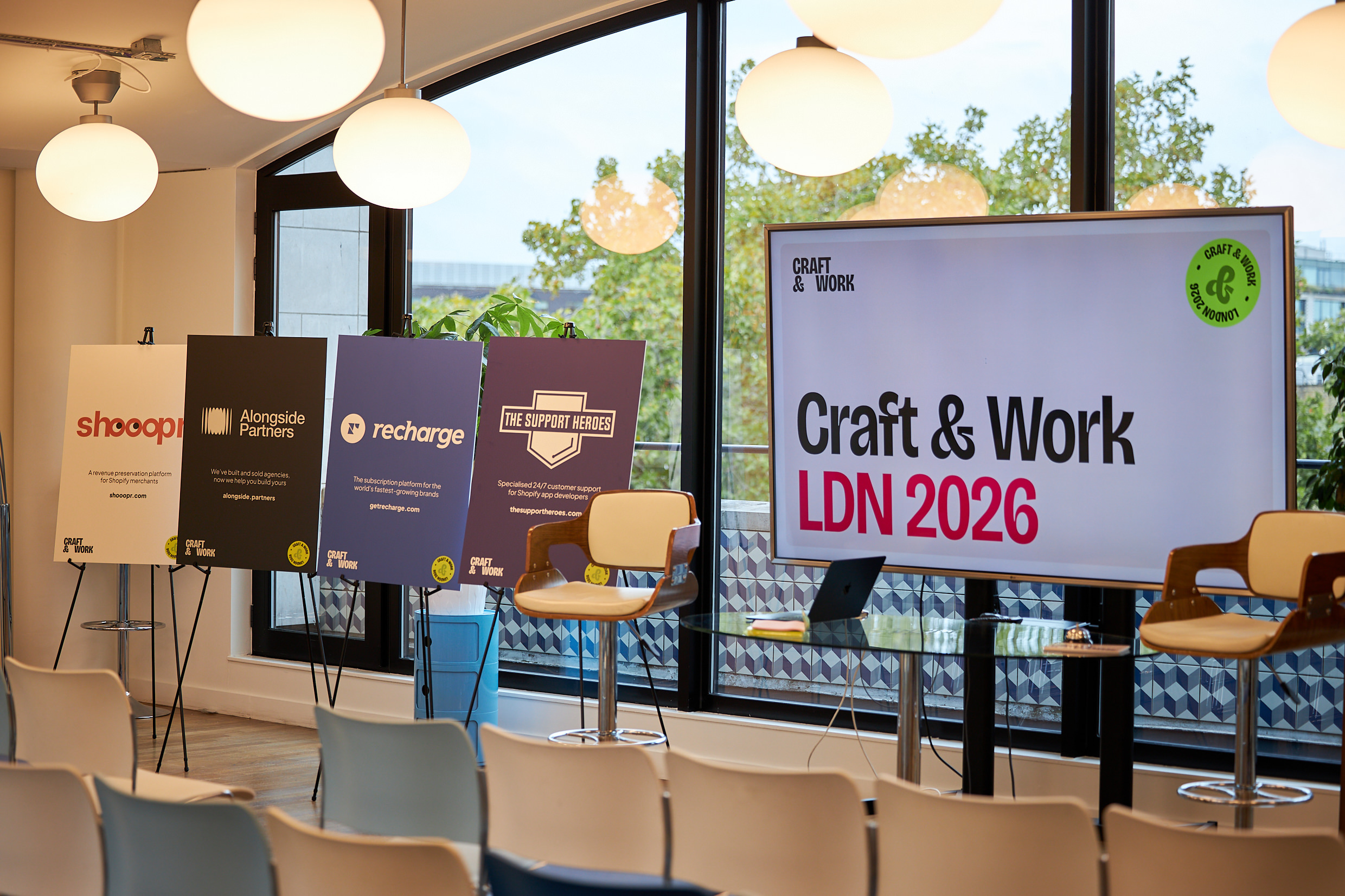
I had the pleasure of capturing the atmosphere and vibe during the event and here is my set of photos.
When speaking to my friends Keir and Craig, I just found out that a lot of people don’t know that you can use a “C7 figure‑8 power cord” with any Apple power adapter in case you forgot your travel adapter.
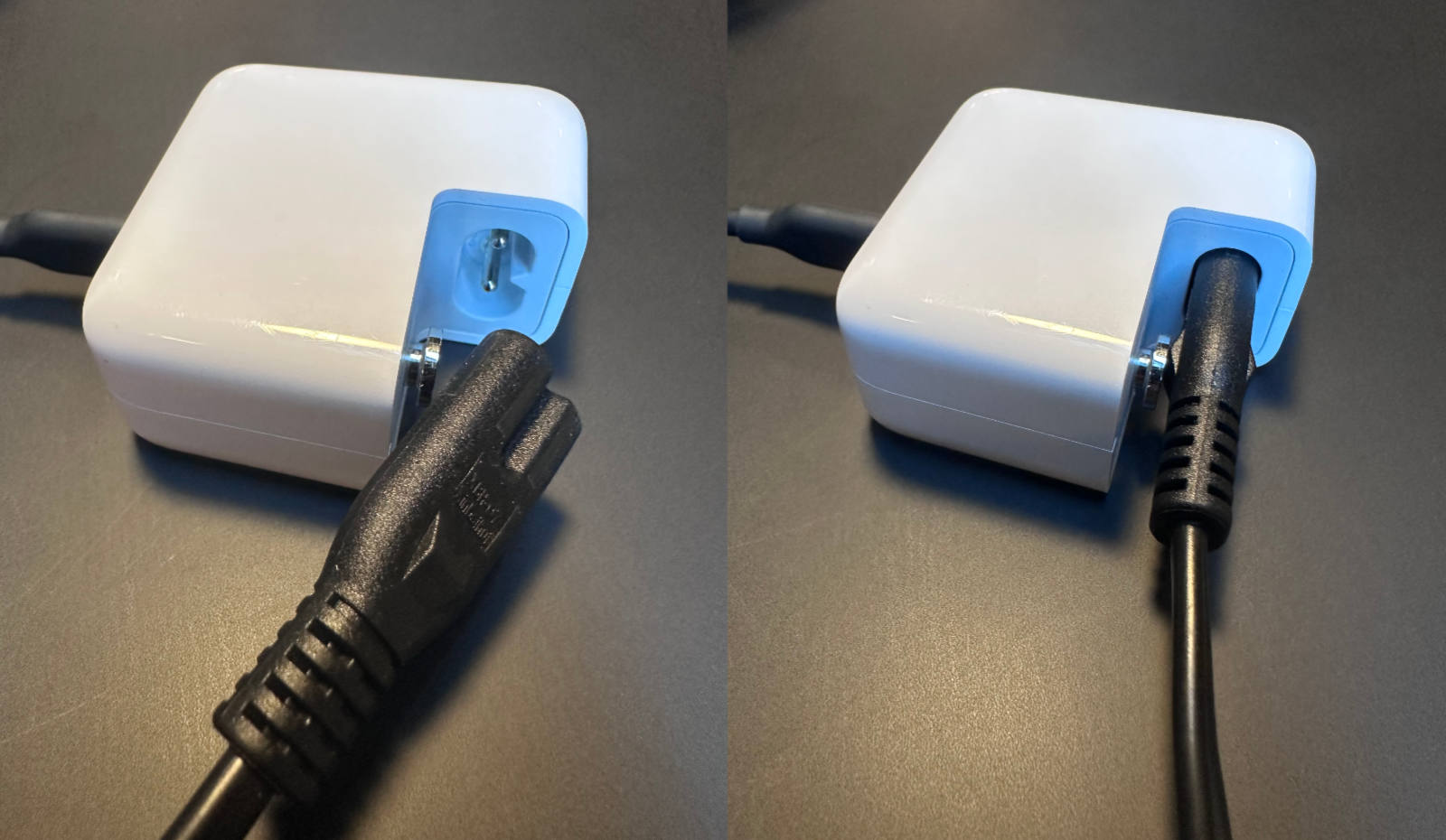
Way cheaper to get one of those usually than a full travel adapter (hint: often times even free if you borrow your hotel’s TV cable 🫣)
This morning the postman rang the bell. That usually means one of two things: something I ordered has arrived or someone sent me something. This time it was the latter.
A small package from Australia. Inside was Shaun Tan’s new book, Hometown. There was a little handwritten postcard and a note inside the book, too.
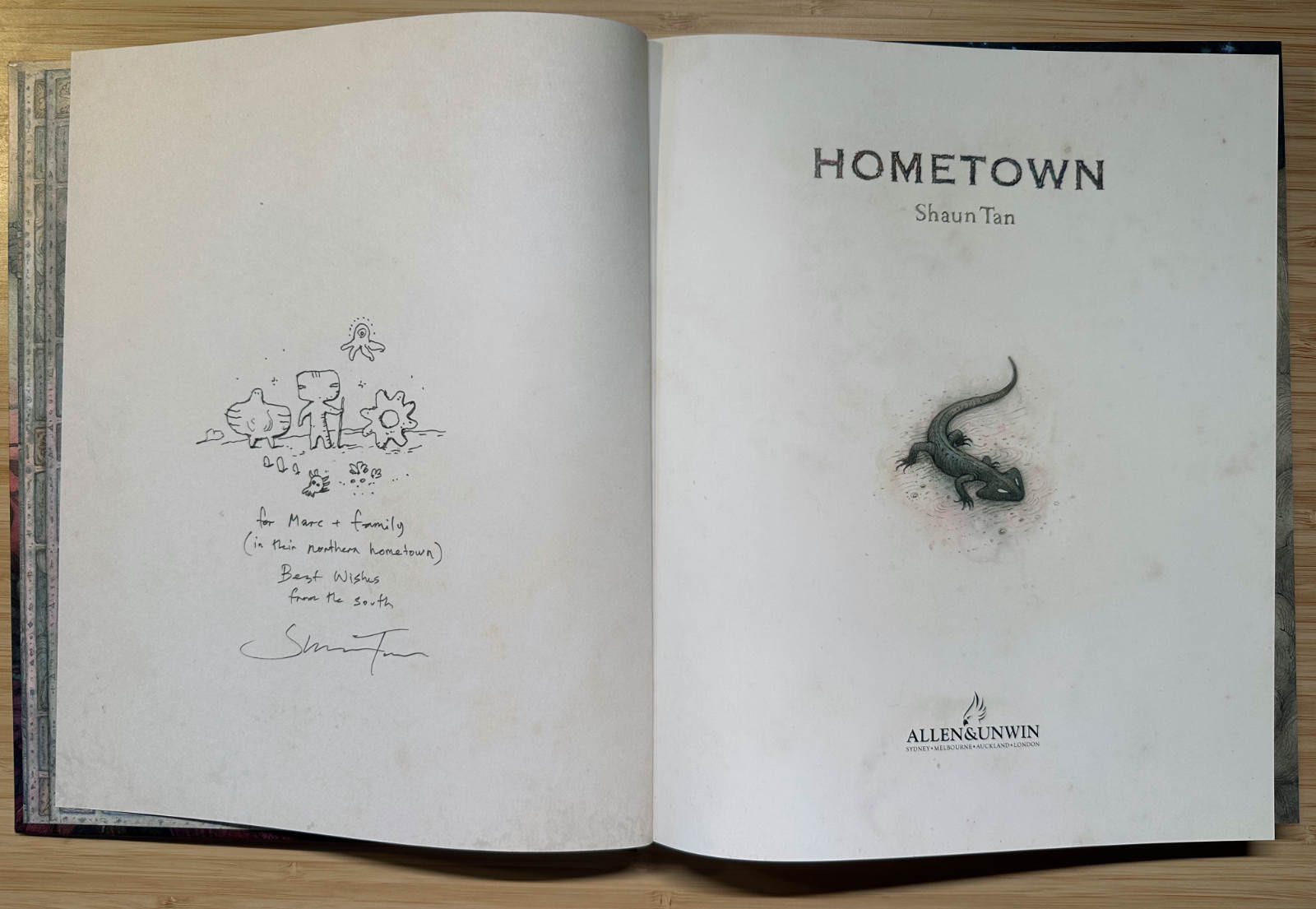
Oh, how that made me smile.
I’ve known Shaun for a while now. Not known as in knowing someone really well, but in that lovely way friendships sometimes develop when you meet someone, stay in touch and every now and then something arrives in the post that reminds you of that connection.
I first met Shaun in Melbourne in 2017. At the time I thought he still lived in Perth. I was going to be in Melbourne for an event, so I wrote him, telling him that I was in Melbourne, so close and yet so far away still with him living in Perth. How happy and surprised I was when he told me, that he recently moved to Melbourne!
So we met.
I already owned The Arrival. Of course I did. But somehow I still ended up leaving Melbourne with a signed copy from Shaun, which was absolutely special for me. We had a lovely conversation and chatted about a lot of things. One was that he had won an Oscar for a short film of The Lost Thing. I totally did not know that and was even more impressed, asking a lot of questions about how the whole process was and, well, what it was like being at the Oscars. I mean … crazy, isn’t it?!
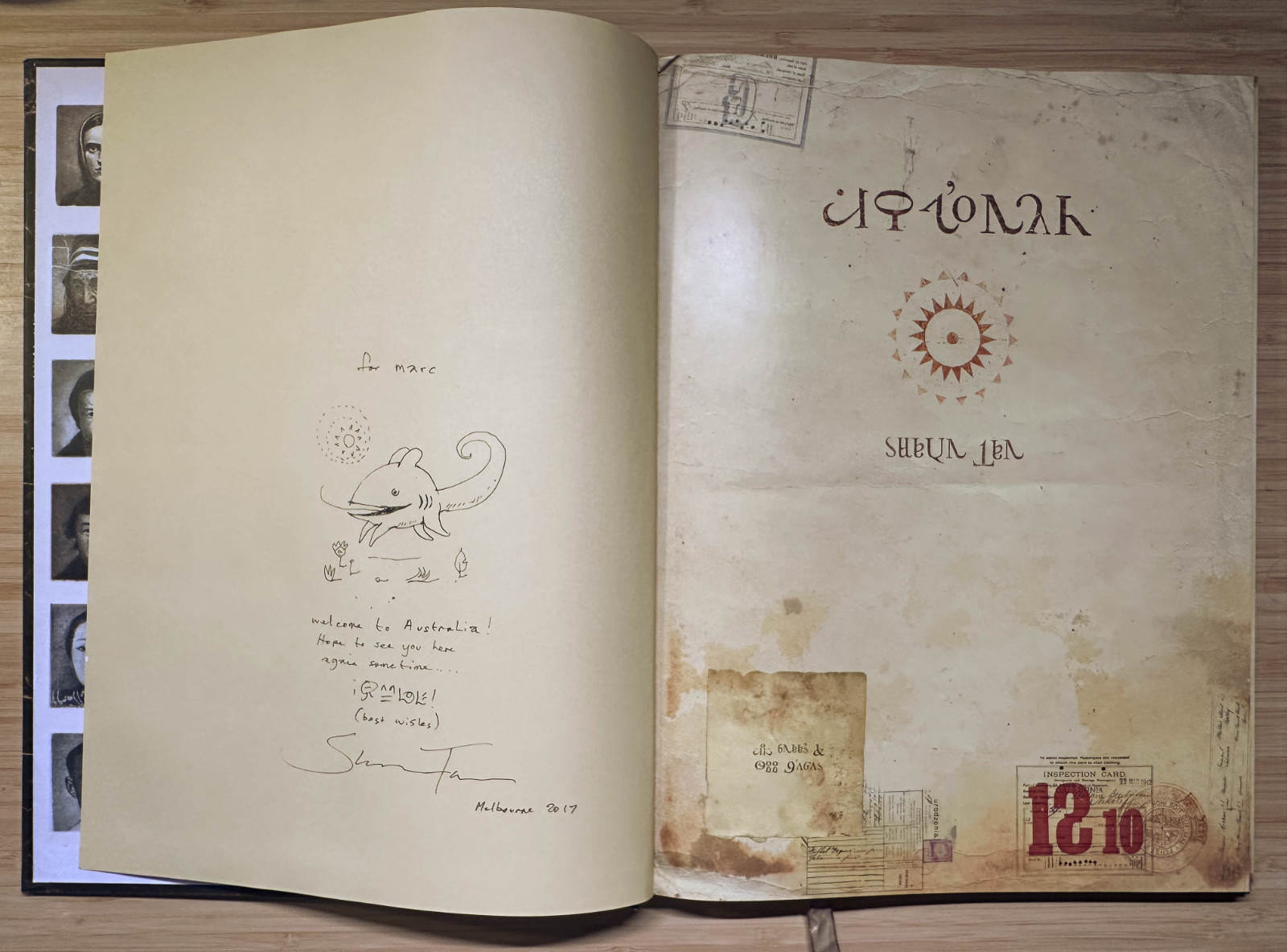
To give you a bit of background why I wanted to meet Shaun: I’ve been giving away his books for more than two decades now. Mostly The Arrival and The Lost Thing. They often are part of the welcome present amongst other things, I give to speakers coming to beyond tellerrand. You know, I like giving people something that has nothing, at least not directly, to do with the event itself. Something that might stay with them a little longer. And I love Shaun’s books for exactly that reason.
They look like beautiful illustrated books. But there is always something underneath. Something that keeps moving around in your head after you’ve closed the book.
I’ve always thought The Lost Thing was, at its heart, a story about belonging. There is this strange creature that clearly doesn’t fit into the world around it. Most people don’t seem particularly interested. They have their routines, their systems, their things to do. But the boy notices it. And eventually he helps it find a place where it belongs. It might be a simple story, but it has never felt simple to me.
Then there is The Arrival, which is almost the other side of that idea. A man leaves his home and arrives somewhere completely unfamiliar. He doesn’t understand the language, the signs, the food, the animals, the machines or the customs. He has to find his way around a new world and, eventually, find a new sense of home.
And this morning I had the pleasure of unpacking Hometown.
I’ve only had the book for a few hours, but the connection to those earlier books was immediately there for me. Again, there is someone trying to understand where they belong. Only this time Shaun turns the question around, I think.
What if you are perfectly happy where you are, with your family and your life and someone arrives and tells you that this isn’t actually your home?
And what if somebody else decides that they know where you belong? Suddenly I found myself thinking about The Lost Thing again. The thing that doesn’t belong. The person who doesn’t belong. The place that doesn’t feel like home. And, well, who gets to decide any of that?
Maybe that is what I love so much about Shaun’s books. They don’t really give you a neat answer. Maybe not even an answer at all. They leave a little space for you to put yourself into the story. At least that is what I find doing myself.
There is something particularly lovely about Hometown arriving at my door like this. Because Shaun has sent me books before. Creature, Tales from the Inner City and others. And every time something arrives, I’m reminded of that meeting in Melbourne in 2017. Of how unlikely it felt that I would actually get to meet someone whose work had been sitting on my bookshelf for years.
And, if I am really honest, there is still one thing I’d really love to happen: I’d love to have Shaun speak at beyond tellerrand one day.
I’ve been giving his books to my speakers for more than twenty years. It would be pretty wonderful to finally have him on the other side of that relationship, standing on the stage and telling his stories himself. Full circle, you know? And until then, I’m super happy when the postman rings the bell. ;)
And now I have another Shaun Tan book on my shelf. Another story about strange places, strange creatures and that surprisingly difficult question, I do ask myself my whole life:
Where do I belong?
I try travel by train more. For beyond tellerrand, for conferences, for meetings. On 2 September I booked a ticket from Forsthaus to Berlin for €198. On 3 September I had to change my plans of traveling by car and needed a train ticket to Freiburg. Second class was shown to me for roughly €349. An offer next to it showed €364 for the first class, which I bought. Despite the fact that it is nearly impossible to take the DB on short notice as it is horrible expensive and really no alternative for those cases, that is €562 in two days.
On the evening of 3 September I was scrolling through Instagram and saw an ad from Deutsche Bahn. The BahnCard 25 at half price. The promotion ran from 1 to 30 September 2026. It covered the business cards too. The BahnCard Business 25 for first class was €69,99 instead of 144.
So the promotion was already running when I booked both tickets. I was shown none of it. Not in the search results, not in the basket, not on the payment page, not in the confirmation.
With the card, I would have saved 25% on both tickets. Roughly €140. Minus the €70 for the card, that comes to about €70. I bought the card anyway, because it pays for itself in my case regardless. Just four hours too late.
This is the part I actually want to talk about, as I think it is bad customer service and stupid btw.
At the moment I clicked “book now”, the system had every piece of information it needed to do that sum …
Four values, one multiplication, one comparison. This is not hard engineering. This is a bloody conditional in a template.
The hint was not forgotten. My guess such things are never planned.
Deutsche Bahn wanted to sell me that card. I know this because they spent money putting an ad in front of me on Instagram. And it worked. The sale happened.
It just happened through a channel that costs money, rather than the one that would have cost nothing for them. And through a channel I happened to be on, rather than the one where I was demonstrably about to spend money.
The difference between those two channels is not technical. It is organisational. The ad comes from marketing, which is measured on conversions. The booking flow belongs to a different team, probably measured on drop-off and in that logic an extra message at checkout looks like friction before it looks like anything else.
The result is a system where the one piece of information that saves the customer money is missing from precisely the place where it would have saved them money.
I wrote to the business service. Politely, with all the documents attached, asking whether they would consider a goodwill gesture. I knew I had no claim. Super Sparpreis tickets cannot be cancelled and a retroactive discount is a discretionary decision, not a legal one. I said exactly that also in the email.

The reply took a long time and ran to three sentences. That redeeming the discount retroactively or offsetting it was unfortunately not possible. That they hoped to welcome me back on board soon. And then a request to help them improve their offer and their service by filling in a survey. 😂 Oh the irony …
I had just described, at some length, how the offer and the service could be improved. The answer was a link to a form where I could describe it again(!), this time in predefined categories.
First: I was not entitled to that money. I am aware of this. Deutsche Bahn is under no obligation to tell anyone about a running promotion and none to refund anything after the fact. Turning me down was within their rights. Sure.
My problem is not with their decision. It is with a system that creates the situation in the first place and with a reply that does not acknowledge the point being made!
Second: this was not a new-customer offer. The discounted BahnCard was available to everyone, me included! That makes it worse rather than better.
If the promotion applied to me and nobody told me about it while I was spending €562 with that exact company, then this is not a question of how a business treats new customers versus existing ones. It is simply that nobody thought to let the two systems talk to each other.
One sentence in the basket. Something like: with a BahnCard 25, currently €69,99 instead of €144, this booking would cost €272,84 instead of €363,78.
That is it. No modal, no interstitial, no newsletter sign-up. One damn sentence in the place where it matters.
Anyone who designs or builds this kind of thing knows the objection. Every extra message at checkout is a risk to conversion. True. But this is not cross-selling and it is not an upsell.
It is a message that makes the basket cheaper and raises the average order value for the next twelve months, because someone with a BahnCard takes the train more often, right? ;)
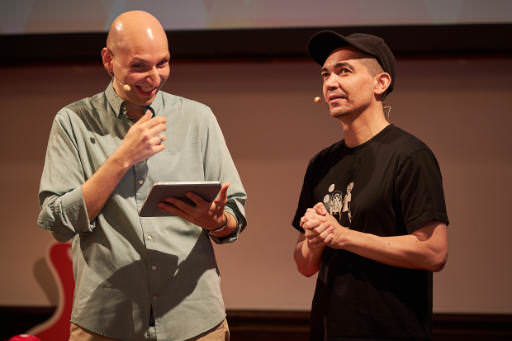
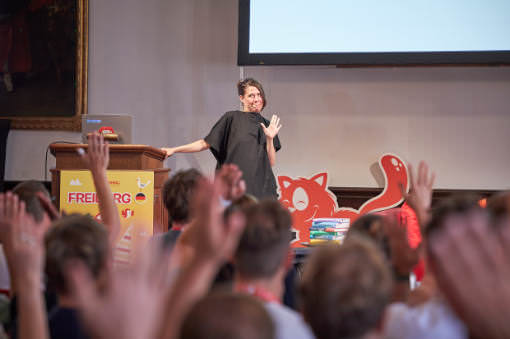
We run this edition since 2012 in Freiburg. Always lovely to be, where Vitaly and I started it.
Here are a few impressions of the days.
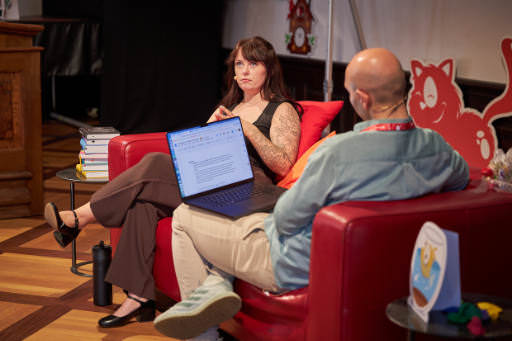
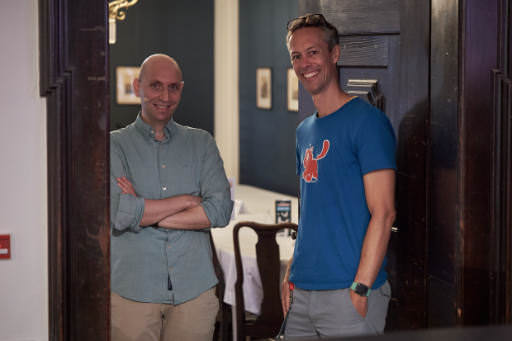
Like I did for the first half of the year, here is my list of events I attend from August 2026 on. Some of these I help to organise, some are run by good friends, and at some of them you’ll find me with a camera in my hands. Maybe more to come, but those are the events – in chronological order – where I have travel and accommodation booked and where I’d love to meet you ;)
Forward Festival is a creativity festival that started in 2015. The Berlin edition takes place at Haus der Kulturen der Welt, known from the good old TYPO events that have always been there. 50+ speakers across three stages over two days, mixing talks with workshops, an expo area, installations, side events and parties. The line-up leans towards design, branding, art direction and motion, with names like Stefan Sagmeister, Anton & Irene, Mr. Bingo, FutureDeluxe and Gemma O’Brien. Less “sit and listen”, more “wander, meet people, get inspired” and I am lookimng forward to meeting a lot of the above listed people, who have spoken at beyond tellerrand.
📆 27–28 August 2026
💰 €370 (Late Bird), Students under 28 €125, Day Pass €205
👉 Programme and tickets
SmashingConf Freiburg is a bit of a homecoming for me. Vitaly Friedman and I founded this conference series back in 2012 and Freiburg is where it all started for Smashing Magazine. This is already the 14th edition in the beautiful Historisches Kaufhaus right at Münsterplatz: two conference days, one track, twelve speakers, plus workshop days before and after. Expect design systems, AI, accessibility, CSS, animation and a lot of “this is how I actually work” live sessions rather than polished showcases. Speakers include Jake Archibald, Emma Bostian, Hidde de Vries, Eva Ferreira, Ioana Teleanu, Joe Natoli and a mystery guest.
📆 7–10 September 2026 (conference 8–9 September, workshops 7 and 10 September)
💰 Conference €770, Workshops €590, bundled tickets and team discounts available
👉 All information and tickets
Hatch is Berlin’s conference for product and UX designers, hosted at Silent Green – a former crematorium turned cultural quarter (also home of Berlin Letters), which gives the whole thing much more of a design festival feeling than a corporate conference. Two stages, around 15 sessions and a line-up curated for topics rather than follower counts: Paula Scher (Pentagram), Randy Hunt (Notion), Sara Vienna (Metalab), Nicole Michaelis (Pleo), Mehmet Aydın Baytaş (Attio) and others. There are also full- and half-day workshops on the two days before the conference.
📆 18 September 2026 (workshops 16–17 September, onsite only)
💰 Onsite sold out – Online €75 (+ VAT), 5 passes €300, 10 passes €500
👉 Programme and tickets
Kirby Konf has a story. The first one was supposed to happen in 2020 – venue booked, tickets sold out, hotels reserved, catering ordered. And then the first lockdowns hit two weeks before the doors were meant to open. Six years later, the team is giving it another try and I’m happy to be part of the crew organising and helping with it. Two days at the Gutenberg Hub in Mainz for everyone building websites with Kirby. Developers, designers and people who just love a CMS that stays out of the way. Confirmed speakers include Matthias Ott, Bruno Meilick, Fabian Michael, Thomas Günther, Johanna Hörrmann, Yoshie Agata, Justus Kraft, Markus Denhoff and Sascha Bregenhorn. If you work with Kirby, this is the place to be this year.
📆 25–26 September 2026
💰 €159 (sold out – waiting list active)
👉 Speakers, schedule and tickets
Craft & Work is run by my good friends Keir Whitaker and Craig Cooper, and it’s the opposite of a big stage event: 50 people in one room at Wallacespace Clerkenwell, a mix of short presentations, hot-seat interviews and group discussions with plenty of room for actual conversation. The audience is made up of soloists, founders and leaders. Many from the Shopify partner ecosystem, but also people from ecommerce, SaaS and consulting. No gurus, no formulas, just honest talk about what it takes to build and run something. The ticket also includes “The Amuse Bouche”, a relaxed evening gathering the night before. I’ll be there taking photos and looking forward to good conversations. As always.
📆 9 October 2026 (pre-event evening on 8 October)
💰 £235 + VAT (~€270)
👉 All details and tickets
JoyConf is Storyblok’s own conference and Storyblok has been a partner of beyond tellerrand for a while now. Last year’s edition brought together 750 attendees from 35 countries with 70 speakers and the 2026 edition moves to the Rheingoldhalle in Mainz, 25 minutes from Frankfurt Airport. The theme is “Content Confidence. Human Connection.”, aimed at developers, marketers and digital leaders working on content systems in an AI-driven world. Speakers announced so far include Dame Dr. Maggie Aderin-Pocock, Keelan Leyser, Stefan Baumgartner, Sahil Gambhir (Lokalise) and Dominik himself. And the best part: it’s free.
📆 28–29 October 2026
💰 Free (registration required)
👉 Agenda, venue and registration
Certainly there are more events around the world, but event budget – also with me – is tighter than it used to be. Less earning, less spending. Easy math done here.
If you need event photos or want to hire me as event consultant – with more than 25 years of experience in that field – to help you with you events, please get in touch
Apart from that: which events are you attending? Will we meet somewhere? Do you know of exciting new events that I don’t know of yet, but that should be on my radar?
Ana Rodrigues has transformed a past talk into a lovely read about how her personal website became her third-space. That place that is neither home nor work, where you gather, wander around and meet people.
She writes about chasing IndieWeb perfection for years, about the pressure she put on herself to build all the tools and endpoints and about how her blog slowly turned into a chore because of it. What helped was letting go: no over-engineering, a site that feels cosy rather than finished, rough code, personal posts instead of a polished professional persona. And carving out time to actually visit other people’s websites again, sign guestbooks, send emails that feel like postcards.
Her takeaway is one I like a lot: everything takes time to build, understand, realise and appreciate. Ten years in, she has an archive she can link to, quote and browse through. Plus she is fairly sure that if she had binned it all in 2015, she would never have known what she was giving up.
Read her post. And then maybe go and work on your own little corner of the web again. ;)